Free Guide · Project Planning
What to Budget Beyond the Building Price
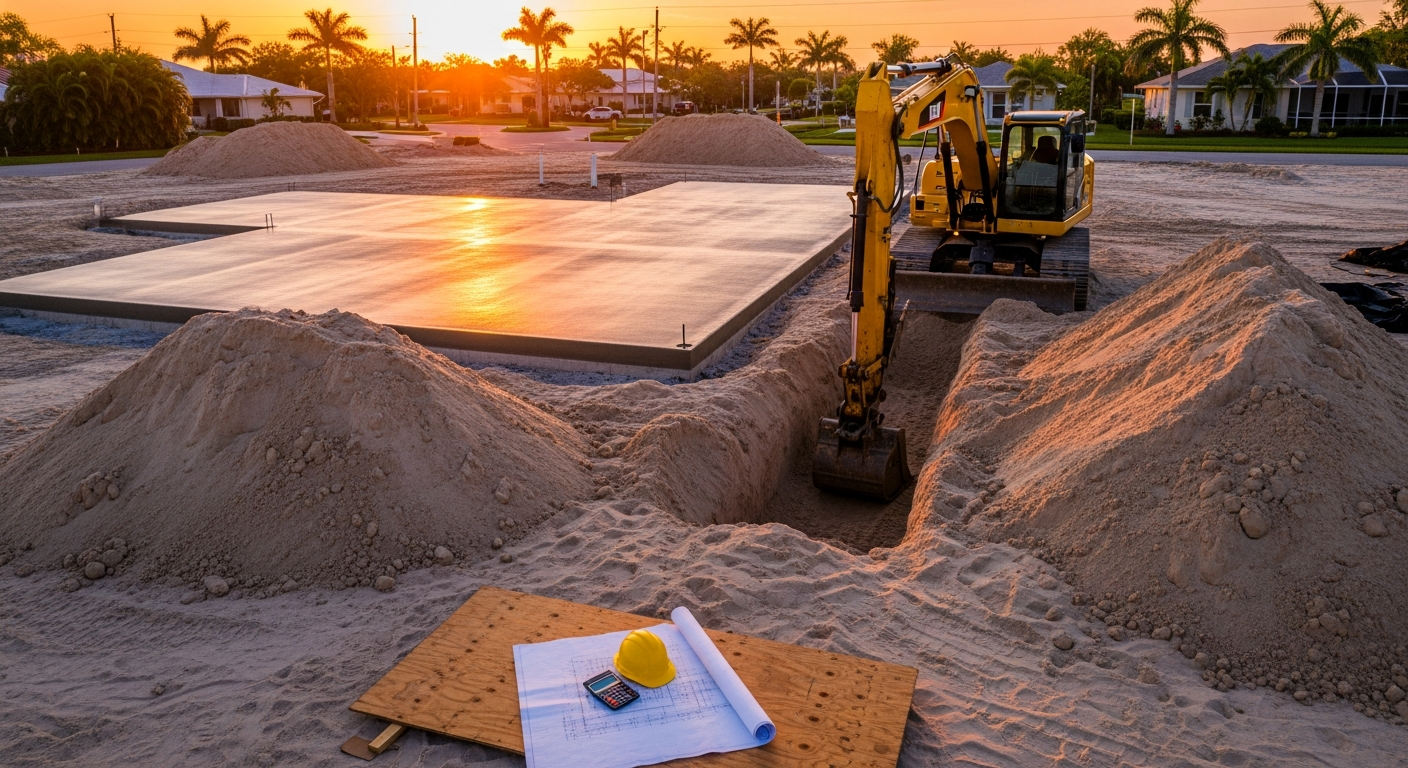
The building quote is just the start. Site prep, foundation, utilities, permits, and delivery can easily add 30–50% on top — and most people don't find that out until the bills start arriving.
 Written by Todd Davis — Veteran-Owned, Saint Augustine, FL · Updated March 2026
The short answer:
For most modular homes and barndominiums in Florida, add $30,000–$80,000+ on top of the building quote for everything else. The exact number depends on your land, how far utilities are, and what finishing the building needs. This guide breaks down each cost so there are no surprises.
Typical Cost Ranges Beyond the Building Quote
| Item | Typical Range | Notes |
|---|---|---|
| Land clearing & grading | $2,000–$15,000 | Wooded lots cost more; flat cleared land, less |
| Foundation / slab | $8,000–$30,000 | Depends on size, soil type, and building type |
| Electric service hookup | $3,000–$20,000 | Higher if you need a new pole or long trench run |
| Well & septic (rural) | $8,000–$25,000 | Soil percolation test required first in Florida |
| Permits & engineering | $2,000–$8,000 | Survey, engineer stamp, permit fees, inspections |
| Delivery & crane / set crew | $3,000–$15,000 | Distance from factory and site access both matter |
| Driveway / access road | $2,000–$12,000 | Gravel minimum; paved runs higher |
| Steps, decks & tie-ins | $1,500–$8,000 | Entry steps and exterior finishing after set |
| Contingency (10–15%) | Budget for it | Surprises happen — soil issues, utility delays, price changes |
1. Land Clearing & Site Prep
Before anything goes on your property, the land has to be ready for it. If you're buying raw land, you'll likely need clearing (removing trees and brush), grading (leveling the ground), and possibly a soil test to make sure the ground can support a foundation.
A flat, already-cleared lot might need minimal prep. A wooded acre in North Florida with a slope can easily run $10,000–$15,000 just to prepare before anything else happens. The access road for the delivery truck also falls here — if your lot doesn't have a driveway that can handle a wide-load truck, that's a cost to budget.
What to ask before you buy land:
- • Is the lot cleared, or does it need clearing?
- • What's the slope? Is grading needed?
- • Is there an existing driveway or road access?
- • Has a soil test been done?
2. Foundation Work
Every building needs something to sit on. What type of foundation you need depends on the building — modular homes typically require a full perimeter foundation or slab, barndominiums often use a concrete slab, and shipping containers can sometimes use piers. In Florida, frost isn't an issue, but soil conditions, flood zone requirements, and hurricane tie-down rules all affect what the foundation has to look like.
A basic concrete slab for a 1,500 sq ft modular home typically runs $12,000–$20,000. If you're in a flood zone or have poor soil, costs go up. This is one of the line items builders quote separately — or leave out entirely and let you figure out on your own.
3. Utility Hookups
This is where rural land buyers get the biggest sticker shock. If utilities don't already run to your property line, you're paying to bring them there. Electric service, water, and sewer (or well and septic for rural lots) each come with their own costs and timelines.
Electric Service
If the utility pole is at the road, a basic service connection runs $3,000–$6,000. If you need a new pole set or a long underground run, it can reach $15,000–$20,000+. Always ask the utility company for a service extension estimate before you buy land.
Well & Septic (Rural)
A drilled well in Florida typically runs $4,000–$8,000. Septic systems run $6,000–$15,000+ depending on soil type and system size. Florida requires a perc test before a septic permit — budget time for that too.
If you're connecting to municipal water and sewer, impact fees alone can run $5,000–$15,000 depending on the county. St. Johns County and Duval County both have significant impact fees that catch buyers off guard.
4. Permits & Engineering
Florida requires a building permit for any permanent structure. The permit fee itself is often based on the value of the project — typically 1–2% of construction cost. But the fees alone aren't the whole cost. You'll also need a survey of your property, engineer-stamped drawings (required for wind-load compliance in Florida), and potentially a wind mitigation study.
Typical permit-related costs in Florida:
- •Survey: $500–$1,500 for a boundary survey; more for a full topographic
- •Engineer stamp: $800–$3,000 depending on complexity
- •Building permit fee: $1,500–$5,000 for residential; more for commercial
- •Inspections: Usually included in permit fee, but re-inspections cost extra
5. Delivery & Setting
Getting the building from the factory to your site costs money that isn't always in the quote. Transport fees are typically calculated by distance and the number of modules. Wide-load transport permits add cost. And if the site requires a crane to set the modules on the foundation — which most multi-module buildings do — the crane day rental runs $2,000–$5,000 on its own.
Always ask your builder: "Is delivery and set included in this price, and what exactly does that cover?" Some include it, some don't, and some include delivery but not the crane.
6. After the Building Is Set
The building is on the foundation — but it's not done. Entry steps or a ramp, exterior skirting, gutters, HVAC connection (if not pre-installed), driveway finishing, and any interior work on kit-style buildings all come after delivery. These are easy to underestimate because they feel small, but they add up fast.
Common post-set costs to budget for:
- •Entry steps or ADA ramp: $800–$3,000
- •Exterior skirting or underpinning: $1,000–$4,000
- •Gutters and downspouts: $500–$1,500
- •HVAC installation (if not included): $4,000–$10,000
- •Driveway and parking area: $2,000–$10,000
- •Landscaping / grading after construction: $1,000–$5,000
Always Budget a 10–15% Contingency
Even when you plan carefully, things come up. Soil that requires more prep than expected. A utility company that takes three months to schedule a hookup, causing delays that cost you money. A permit revision that requires an additional engineer fee. Material price changes between when you get a quote and when work actually starts.
A 10–15% contingency on your total project budget isn't pessimism — it's what separates buyers who finish their projects from buyers who run out of money halfway through. If you don't use it, great. But don't build a project without it.
What to Do Before You Get a Quote
The best time to understand the full cost picture is before you talk to a single builder — not after you've fallen in love with a floor plan. When you request quotes through us, we help you think through the site costs specific to your location so the number you're comparing is the real number, not just the building.
Worksheet for This Guide
Total Project Budget Planner
A structured worksheet that walks through every cost category in this guide — building, site prep, utilities, permits, delivery, and contingency — so nothing surprises you at closing.
Get the Free Worksheet →Get a Quote That Includes the Full Picture
Compare free quotes from verified Florida builders — we help you understand what's included and what isn't before you sign anything.
Compare Free Quotes Now