Free Guide · Zoning & Permits
Florida Zoning & Permits: What Stops Projects Before They Start
Wind-load codes, HOA restrictions, permitting backlogs, and zoning rules that catch Florida buyers off guard — explained in plain English before you commit.
 Written by Todd Davis — Veteran-Owned, Saint Augustine, FL · Updated March 2026
The Permitting Problem
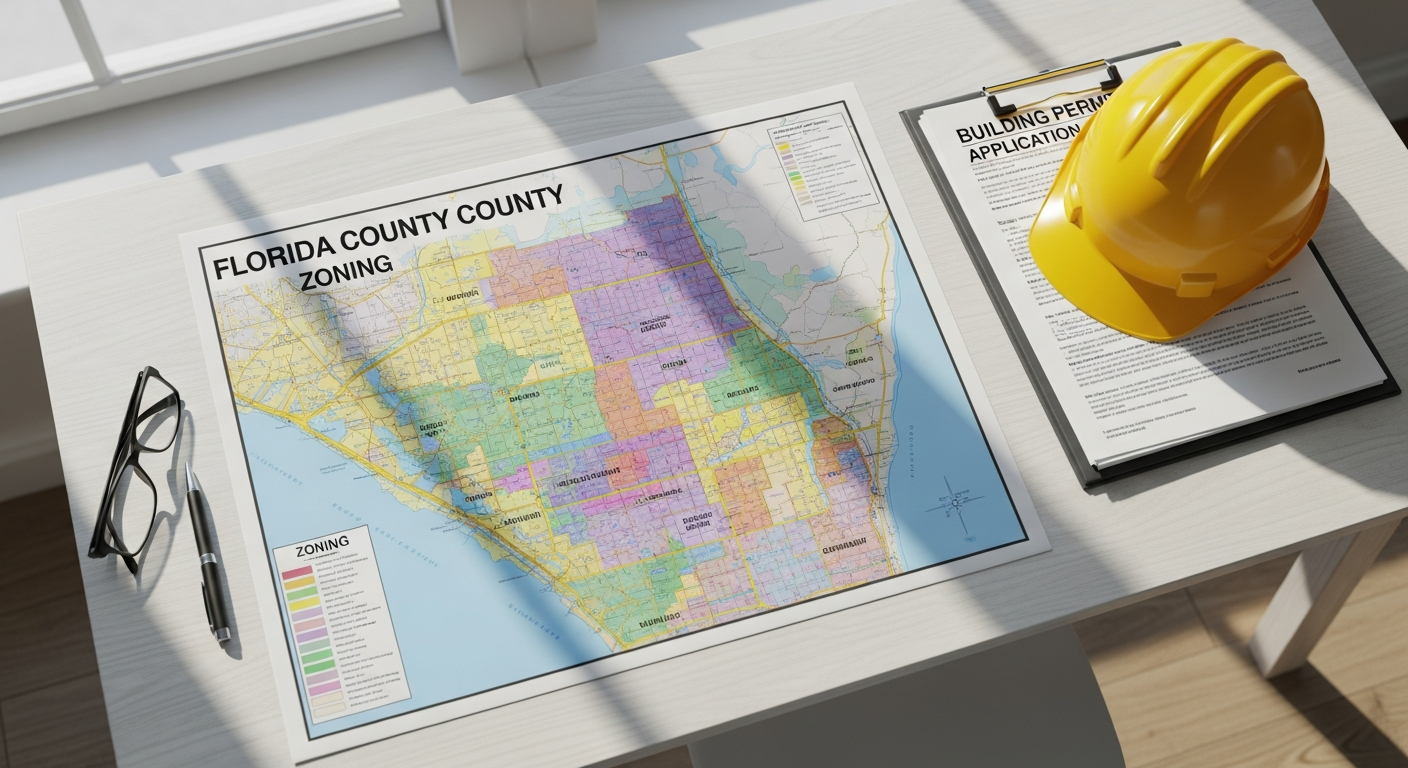
More modular projects are derailed by permitting than by any construction issue. The problem is not that modular buildings cannot meet code; it is that many jurisdictions do not have clear pathways for approving them. Plan reviewers accustomed to site-built construction may not understand how factory-inspected modules integrate with local code requirements, leading to extended review cycles, redundant inspections, and requests for documentation that does not apply to modular construction.
The result is that owners often spend 60-90 days longer in permitting than necessary, while their factory slot sits idle or gets reassigned. Understanding the permitting landscape in your jurisdiction before you commit capital is not optional; it is the difference between a project that launches on schedule and one that bleeds money before a single module is delivered.
Florida's Hurricane Codes: What They Mean for Your Build
In Florida and other coastal states, wind-load requirements are the single most critical code factor for modular construction. The Florida Building Code (FBC) requires structures in much of the state to withstand sustained winds of 130-150 MPH, with higher requirements in the most exposed coastal zones. This directly affects structural engineering, connection details, roof attachment methods, and the tie-down systems used to anchor modules to their foundations.
A critical distinction that affects every modular project is the difference between HUD Code (federal manufactured housing standards) and the IRC (International Residential Code) or IBC (International Building Code). HUD Code structures are classified as manufactured housing and face different zoning treatment, financing options, and appreciation patterns than IRC-compliant modular buildings, which are treated as conventional construction once set on a permanent foundation.
Key Code Frameworks
HUD Code
Federal standard for manufactured housing. Built on a permanent chassis. Different zoning treatment in many jurisdictions.
IRC (Residential)
State-adopted residential code. Modular homes built to IRC are treated as site-built for permitting, financing, and appraisal.
IBC (Commercial)
Commercial building code. Required for offices, retail, healthcare, and multi-family over certain thresholds.
Zoning Restrictions That Kill Projects
Even when a modular building meets every structural and energy code requirement, it can still be blocked by local zoning ordinances. These restrictions vary dramatically between jurisdictions and can include minimum square footage requirements that exceed what the owner intends to build, setback requirements that do not leave enough room for module placement and crane access, height limits that conflict with certain roof configurations, and aesthetic restrictions imposed by HOAs or historic districts.
Common Zoning Killers
- Minimum square footage: Some counties require 1,200+ sq ft minimums that eliminate smaller modular options
- Setback conflicts: Module delivery requires crane access that tight setbacks may not accommodate
- HOA restrictions: Deed restrictions may prohibit metal buildings or manufactured/modular structures by name
- Rural vs. urban differences: Rural parcels often have fewer restrictions but may lack utility infrastructure
Adding a Guest House or Studio? Here's What Florida Allows
Accessory Dwelling Units (ADUs) represent one of the fastest-growing segments of modular construction, driven by housing affordability pressures and aging-in-place demand. However, ADU regulations vary dramatically by state and municipality. Some jurisdictions have embraced ADU-friendly policies with streamlined permitting and reduced fees, while others maintain restrictive ordinances that make ADU construction impractical or impossible.
Several states, including California, Oregon, and Washington, have enacted state-level preemption laws that override local ADU restrictions and establish baseline standards for ADU approval. Florida has taken incremental steps toward ADU reform, but local authority still governs most permitting decisions. Understanding whether your jurisdiction allows ADUs, and under what conditions, is essential before investing in a modular ADU strategy. Our review process includes a jurisdictional check that maps your specific parcel against current ADU regulations.
What to Check Before You Buy Land or Start Plans
Before you spend money on plans, engineering, or a land deposit, it's worth knowing whether your parcel and project type are actually going to get approved. The things that most commonly kill projects in Florida — wrong zoning classification, HOA deed restrictions, wind-load requirements you didn't budget for, setbacks that don't leave room for delivery — are all discoverable upfront. This section walks through what to look for so you're not finding out after the fact.
Things to Verify Before You Commit
Know What You're Walking Into Before You Buy
Compare free quotes and we'll check the zoning, code, and permitting picture for your location before you commit to anything.
Compare Free Quotes Now