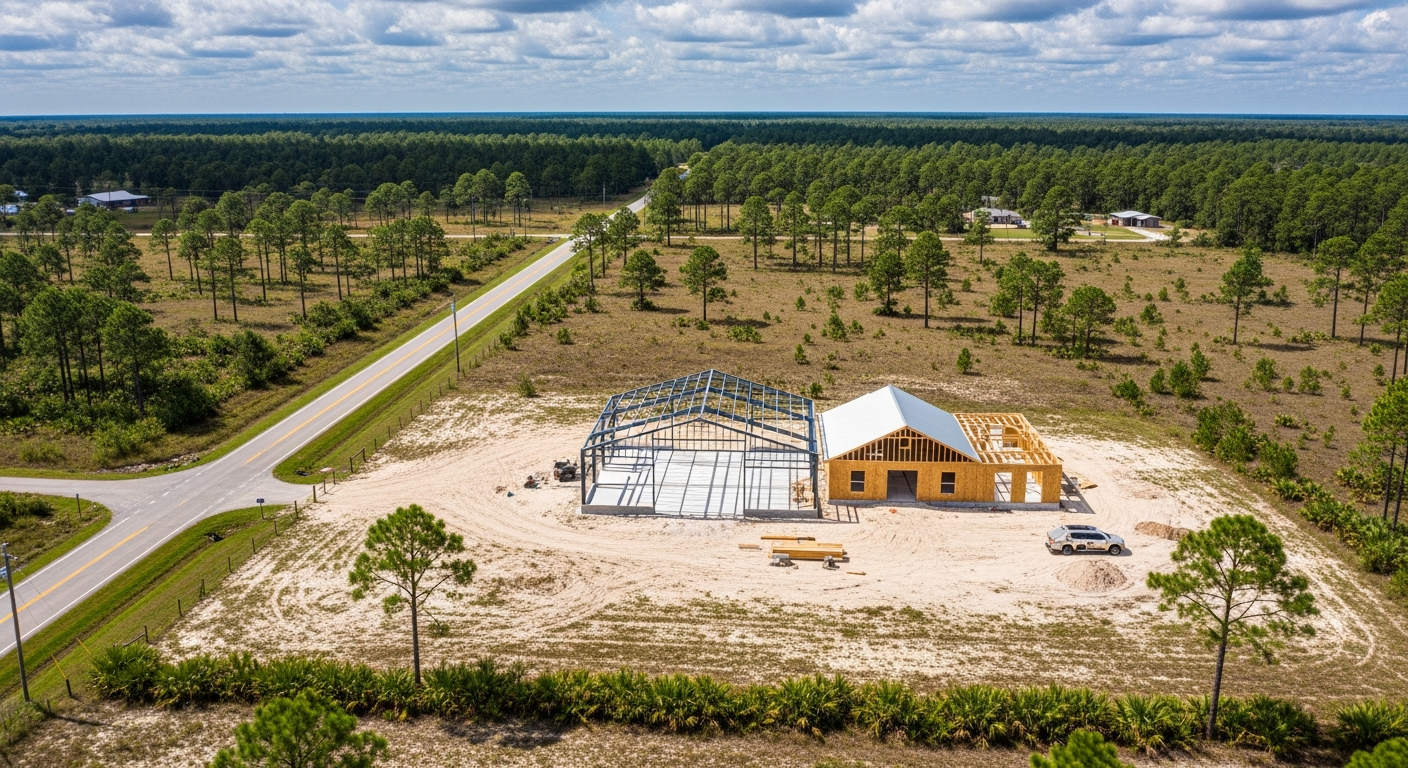
The short answer:
Yes — but it depends entirely on your county, your zoning classification, and whether the parcel allows residential structures. North Florida counties vary significantly in how they classify and permit barndominiums. Check zoning before you buy land.
Why Zoning Matters More Than People Expect
Florida doesn't have a statewide "barndominium law." Each county and municipality makes its own rules about what can be built where. The same style of metal building might be permitted easily in one county and require a variance in the next one over.
The two things that most affect whether you can build are: (1) your land's zoning designation, and (2) how your county classifies the structure — as agricultural, residential, or mixed use.
North Florida County Overview
| County | Generally Permitted? | Notes |
|---|---|---|
| St. Johns County | Yes — rural zones | AG and rural residential zoning typically allows barndominiums. Check flood zone designation — coastal areas have additional rules. |
| Duval County (Jacksonville) | Varies by zone | Urban areas are restrictive. Rural unincorporated Duval is more flexible. Jacksonville's urban service boundary matters a lot here. |
| Clay County | Yes — rural zones | One of the more barndominium-friendly counties in the region. AG and rural residential zoning commonly permits steel residential structures. |
| Flagler County | Yes — rural zones | Generally permissive for rural parcels. Verify there's no HOA restriction — Flagler has several planned communities with deed restrictions. |
| Alachua County (Gainesville) | Yes — rural zones | Rural AG zoning is permissive. City of Gainesville itself is more restrictive. County is the better bet for barndominium builds. |
| Nassau County | Yes — rural zones | Yulee and Fernandina Beach areas are growing — verify rural land hasn't been upzoned or annexed. |
| Putnam County | Yes — very permissive | One of the most rural-friendly counties in the region. Lower cost land, less permitting friction, but confirm utility access early. |
Important: This table reflects general patterns as of 2026 but zoning codes change. Always verify with your specific county's planning and zoning department before purchasing land or signing a building contract.
Florida Building Code Wind-Load Requirements
This is the one that trips people up most often, especially buyers who've built in other states.
Florida uses wind speed maps divided into zones. North Florida coastal counties — including St. Johns, Duval, Flagler, and Nassau — sit in wind zones requiring buildings to withstand 130–150 MPH winds. Inland counties like Alachua, Putnam, and Clay typically require 130 MPH.
What this means for your barndominium:
- Your building must be designed and stamped by a Florida-licensed engineer
- Steel gauge and anchor bolt specifications must meet or exceed the wind zone requirement
- Doors, windows, and openings need hurricane-rated components
- Out-of-state suppliers may quote buildings that don't meet Florida specs — confirm before ordering
Don't skip this step:
Many national barndominium kit manufacturers sell "standard" buildings that are engineered for 90–110 MPH. That won't pass a Florida building inspection in most counties. Ask every supplier upfront: "Is this building engineered for 130 MPH minimum and can you provide Florida-stamped drawings?"
The Steps to Check Before You Buy Land
Look up the parcel's zoning designation
Every county in Florida has a public GIS portal where you can look up any property address or parcel ID and see its zoning. Search "[County name] Florida GIS parcel search." You want AG, RR (rural residential), or similar designations — not residential subdivision zones.
Call the county planning department and ask directly
Tell them you want to build a steel residential structure (barndominium) on [parcel ID] and ask if it's a permitted use, if a special exception or variance is required, and what the setback and minimum square footage requirements are. Most counties are helpful with these calls.
Check for HOA or deed restrictions
Zoning says what the government allows. Deed restrictions say what the previous owner or developer required. HOAs can prohibit metal buildings regardless of zoning. Pull the deed and look for restriction language before you close.
Confirm flood zone status
Florida has a lot of flood-prone land. Use FEMA's Flood Map Service Center (msc.fema.gov) to look up the parcel. Land in Zone AE or VE requires flood elevation certificates and may require elevated foundations that significantly change your costs.
What About the Permitting Process?
Assuming you're in a permitted zone, the typical permit process for a barndominium in North Florida looks like this:
- Building permit application — submitted to the county building department with site plan, floor plan, and engineer-stamped structural drawings
- Septic permit — if no city sewer, required before building permit in most counties (go through Florida DOH county health department)
- Well permit — if no city water, through the county or St. Johns River Water Management District
- Inspections — foundation, framing, electrical, plumbing, insulation, and final occupancy inspection all required
About the Author
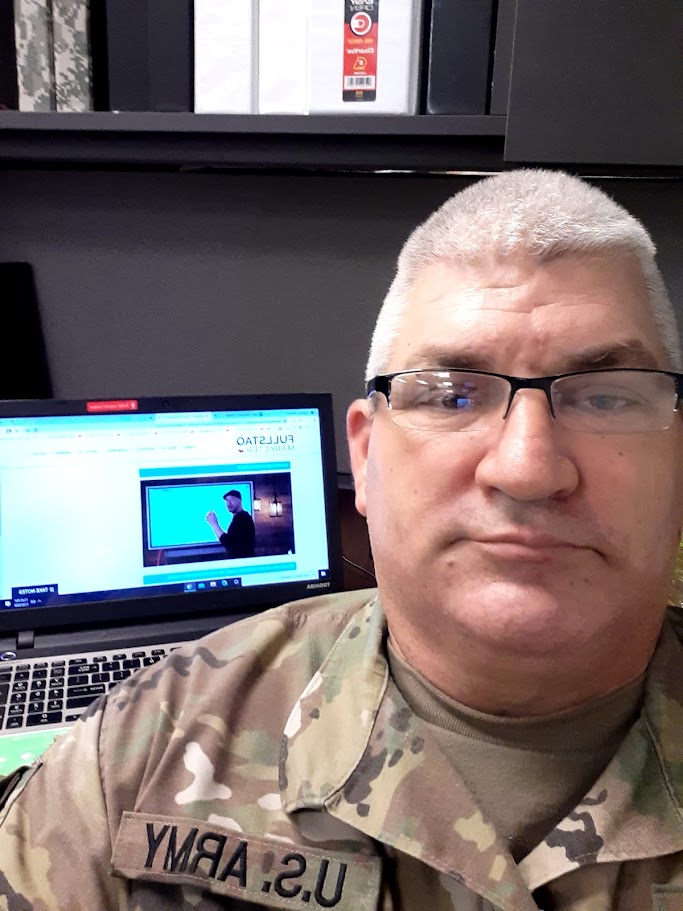
Todd Davis is the founder of Modular Space Systems, based in Saint Augustine, FL. He bought a manufactured home in 2013, spent years researching barndominiums and prefab construction, and retired from the U.S. military after 22 years in December 2025. This site exists because he couldn't find a plain-English resource when he was shopping — so he built one.
Ready to Get Real Pricing for Your Area?
We'll connect you with verified suppliers who know Florida's building codes. Free, no obligation.
Compare Free Quotes NowOr call us: 1-888-248-7899