Free Guide · Build Timelines
How Long Does a Modular Build Actually Take in 2026?
Modular builds can be 30–50% faster than stick-built — but Florida permits and factory lead times can wipe out that advantage if you don't plan ahead.
 Written by Todd Davis — Veteran-Owned, Saint Augustine, FL · Updated March 2026
Why Timeline Matters More Than Most Buyers Think
In 2026, every month of delay costs you money in ways that are harder to absorb than in previous years. Material cost volatility means a quote you receive today may not hold in 90 days. The interest rate environment means carrying costs on land and construction loans compound faster. And the opportunity cost of waiting, whether that is lost rental income, delayed business operations, or missed market windows, continues to grow.
Speed-to-market is not just about building faster; it is about reducing your total exposure to financial risk during the construction window. The shorter that window, the less you pay in carrying costs, the less you are exposed to price escalation, and the sooner your asset begins generating returns.
Modular vs. Stick-Built: The Real Time Difference
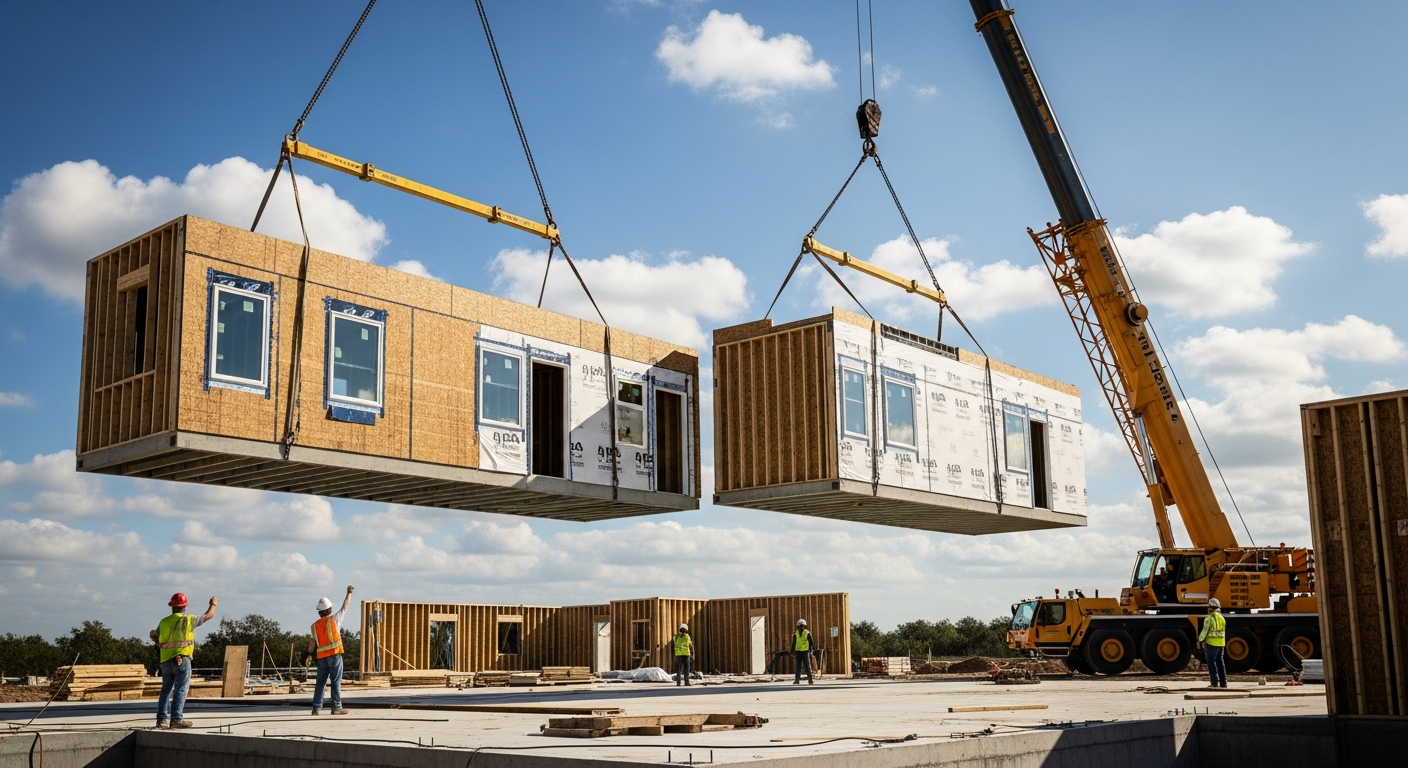
Modular construction delivers 30-50% faster timelines compared to traditional site-built methods. The fundamental advantage is parallel processing: while your foundation and site work are being completed on location, your building modules are being fabricated in a controlled factory environment. There are no weather delays on the factory floor, no subcontractor scheduling conflicts, and no sequential bottlenecks that plague conventional builds.
Typical Project Timeline Comparison
Modular Construction
4-6 Months
- Site prep and factory build run simultaneously
- No weather delays during fabrication
- On-site assembly in days, not months
Traditional Site-Built
8-14 Months
- Sequential phases cannot overlap
- Weather delays add weeks or months
- Subcontractor scheduling bottlenecks
What to Expect From Factories and Permits in 2026
Steel pricing has stabilized from the extreme volatility of 2022-2024, but remains elevated compared to pre-pandemic levels. Supply chain improvements have reduced factory lead times from 16-20 weeks back to 10-14 weeks for most manufacturers, though custom configurations and high-demand periods can still extend timelines.
Labor availability remains a critical factor favoring modular construction. The skilled labor shortage in site-built construction continues to drive delays and cost overruns. Factory environments, with their controlled conditions and consistent scheduling, have proven more effective at attracting and retaining workers, which translates directly to more predictable production timelines.
How to Protect Your Build Schedule
The single most effective action you can take is to get your quote request in early. Projects that begin with a structured scope and clear site parameters get into manufacturer queues faster and avoid the delays that come from incomplete specifications or last-minute design changes.
Timeline Protection Checklist
- Compare free quotes with complete scope and site details
- Get manufacturer commitments with locked production slots
- Secure permits in parallel with factory production
- Pre-qualify site conditions and utility connections early
- Lock material pricing with deposits where possible
Compare Quotes Before Factory Slots Fill Up
Compare free quotes today and get into the manufacturer queue before lead times extend further.
Compare Free Quotes Now